


Key Messages
- The right property is about operational fit, not just price.
- Zoning and infrastructure often determine whether a property will work.
- A structured property tour can catch problems early.
A well-structured LOI and contingencies help protect the buyer.
After deciding that commercial real estate ownership is the right move, the next step is finding a commercial property that fits the business.
Price and location matter, but they are not enough. A property also needs to work for the business’s use, customers, employees, deliveries, equipment, utilities, timeline, and financing plan.
Have a property in mind? Contact us to learn about factors that may affect financing.
Defining Commercial Property Search Criteria
Before choosing a building, business owners should define their space, location, parking, access, storage, and utility needs.
A food business may need plumbing, ventilation, and grease-trap considerations. A manufacturer may need high power capacity and loading access. A medical or service business may need treatment rooms, accessibility, and customer parking.
A commercial real estate broker who understands the industry can help screen properties more effectively. Owners still deciding whether or not to own can revisit the lease vs. buy commercial property guide.
Found a Property You May Want to Buy?
What to Look for During a Commercial Property Tour
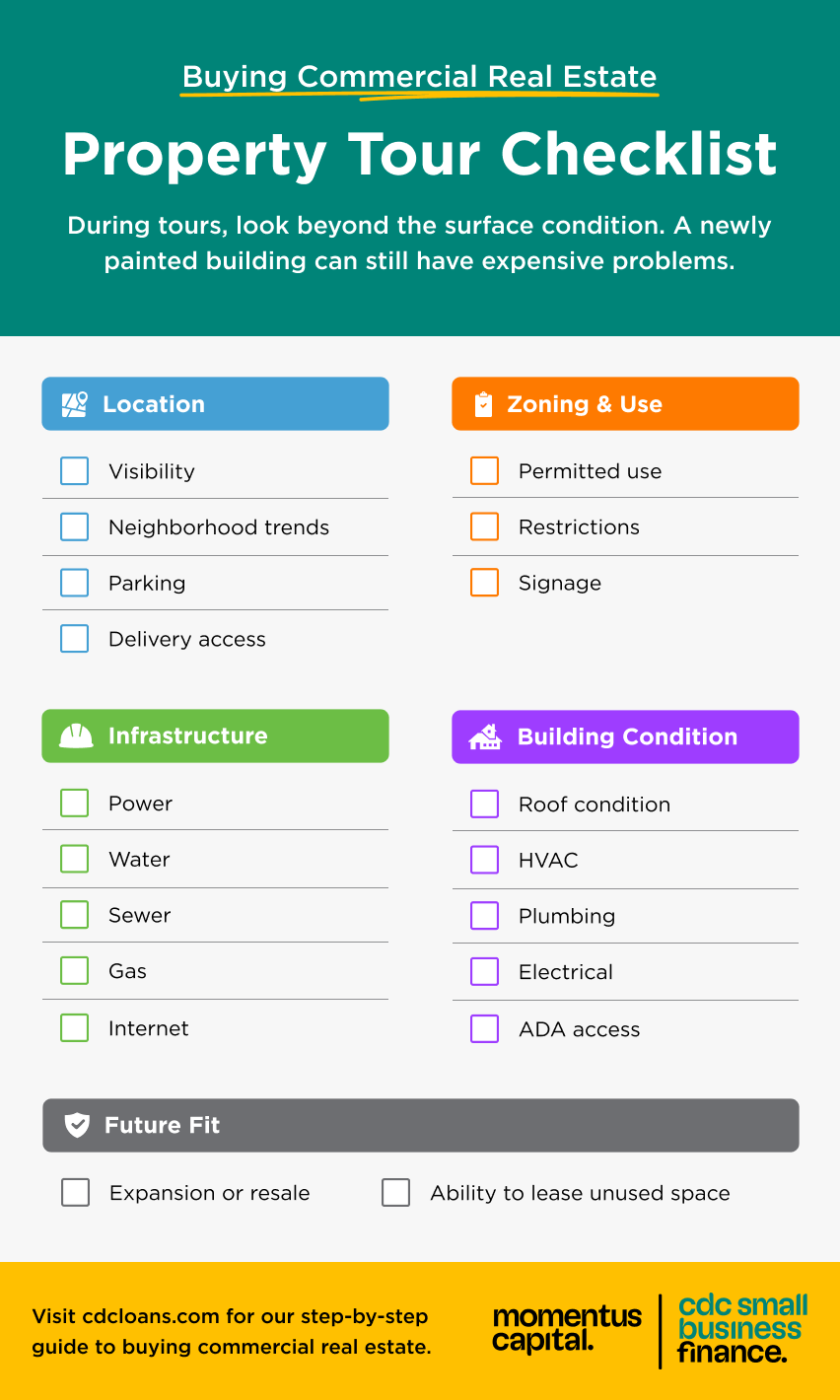
During tours, look beyond the surface condition. A newly painted building can still have expensive problems.
 Check these items:
- Roof condition
- HVAC, plumbing, and electrical systems
- ADA access
- Parking and customer access
- Delivery and employee access
- Visibility and signage
- Utility capacity
- Layout and usable square footage
- Neighborhood trends and surrounding uses
- Expansion or resale potential
Business owners should document questions after each tour so the properties can be compared side by side.
Looking at a specific building? Contact CDC Small Business Finance early so financing conversations can start before due diligence.
Commercial Real Estate Zoning & Use Restrictions
Zoning Zoning Local rules that determine what uses are allowed on a property. Open Glossary determines how a property can be used. A building may look perfect, but if the zoning does not allow the intended business activity, the deal may not work.
Use restrictions Use Restrictions Limits on how a property may be used, which may come from zoning, deeds, associations, or other rules. Open Glossary can also come from recorded documents, associations, prior agreements, or local rules. Business owners should always verify intended use with the local planning office, a zoning expert, or qualified counsel before committing significant time and money.
Infrastructure & Site Constraints
Infrastructure Infrastructure Utilities and site systems such as power, water, sewer, gas, internet, drainage, and road access. Open Glossary includes the utilities and site systems that allow the business to operate: water, sewer, roads, power, gas, internet, drainage, and access.
Insufficient infrastructure can create hidden costs. A building may need electrical upgrades, plumbing changes, improved accessibility, or other work before the business can open. These issues should be identified early because they can affect the budget, financing, and timeline.
How to Structure an LOI
A letter of intent, or LOI, Letter of Intent (LOI) A preliminary document that outlines major deal terms before final legal documents are completed. Open Glossary outlines the basic terms before the final purchase agreement is negotiated.
An LOI may include purchase price, deposit, timeline, due diligence period, financing contingency, closing target, and major seller or buyer obligations. It is usually not the final binding agreement, but it helps both sides align before deeper work begins.
Why Contingencies Matter
Contingencies are protections that allow a buyer to move forward only if certain conditions are satisfied. Common contingencies include financing, inspections, environmental review, zoning, permits, and due diligence.
For a small business buyer, contingencies can be the difference between a controlled process and being locked into a property with unresolved risks.
The right property is one that fits operations, use, infrastructure, timeline, and budget. Once the offer is accepted, the next step is a structured commercial real estate due diligence checklist.
Found a Property You Are Serious About?
Contact CDC Small Business Finance before the offer goes in.
Follow the Phases in Our Guide to Buying Commercial Property
- How to Buy Commercial Property: A Step-by-Step Guide for Business Owners
- Phase 1: Lease vs. Buy Commercial Property: Should a Business Owner Buy?
- Phase 2: How to Find Commercial Property for a Business
- Phase 3: Commercial Real Estate Due Diligence Checklist for Buyers
- Phase 4: How to Finance Commercial Real Estate: Loan Options, Underwriting, & Closing
- Phase 5: Commercial Property Tenant Improvements: How to Plan a Build-Out
- Phase 6: Cost of Owning Commercial Property: Responsibilities & Long-Term Strategy
- Commercial Real Estate Glossary: Key Terms for Business Owners