


Key Messages
- Many properties need improvements before a business can move in.
- Scope, permits, and timeline should be planned early.
- Contingency matters because renovation surprises are common.
- Some financing options can include improvements as part of the project.
Finding the right property does not always mean finding a move-in-ready space. Many small business owners need tenant improvements or a build-out before they can open, expand, or operate efficiently.
That work can affect the purchase budget, loan structure, closing timeline, and move-in date. The earlier the scope is understood, the easier it is to plan.
Tenant improvements are renovations that make a commercial space work for a business. Although the term is often associated with leased property, it is also commonly used for improvements to an owner-occupied commercial building.
Planning renovations? Connect with CDC Small Business Finance to learn about including improvements in your financing plan.
How to Assess Whether a Building Needs Tenant Improvements
Start with how the business needs to operate. Walk the property and ask:
- Does the layout support customer and staff flow?
- Are there enough offices, workstations, treatment rooms, kitchens, storage areas, or production areas?
- Is the square footage usable?
- Is there enough parking?
- Can the power, HVAC, water, gas, and electrical systems support the business?
- Are ADA, fire, life safety, and occupancy requirements likely to require upgrades?
If the property is close but not quite right, improvements may make it work. If the gap is too large, another property may be a better fit.
Planning to Buy or Improve a Commercial Property?
What are Common Tenant Improvements?
Common tenant improvements Tenant Improvements Renovations or upgrades that make a space work for the business, such as walls, plumbing, electrical, HVAC, fixtures, accessibility, or specialized build-out. Open Glossary include:
- Interior walls, flooring, ceilings, and finishes
- Plumbing and electrical work
- HVAC upgrades
- ADA accessibility improvements
- Signage and storefront work
- Kitchen, lab, warehouse, showroom, or medical build-outs Build-out The construction process that turns a space into a functional location for the business. Open Glossary
- Fire and life safety improvements
CDC Small Business Finance has also published a more lender-focused guide on how SBA 504 tenant improvements work for projects that include improvements as part of an SBA 504 structure.
How to Plan a Tenant Improvements Project
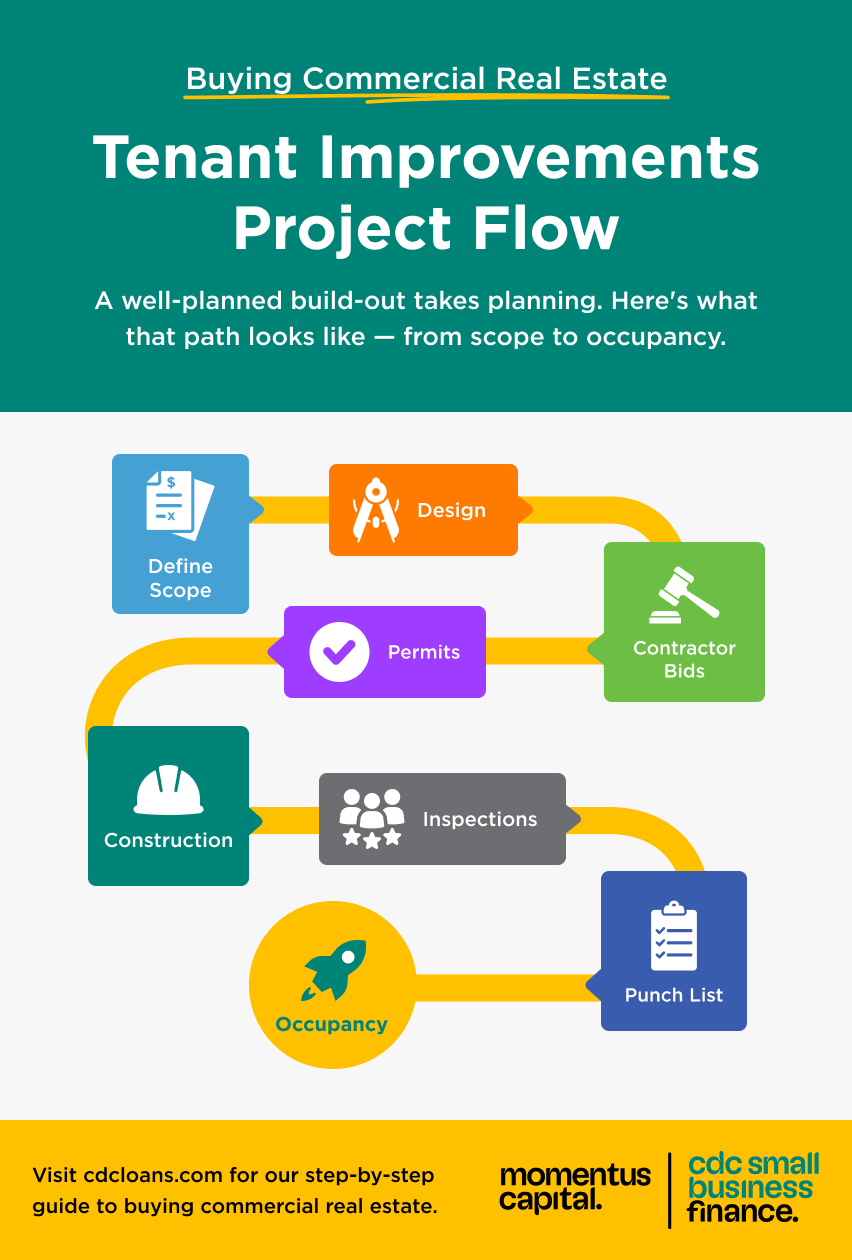
A strong improvement plan usually includes an architect or designer, a clear scope, multiple contractor bids, permit planning, and a realistic timeline.
The general contractor (GC) General Contractor (GC) The contractor responsible for managing construction, subcontractors, schedule, safety, and completion. Open Glossary matters. The lowest bid is not always the best fit if the contractor does not have the experience, capacity, or licensing the project needs. Vet the contractor’s experience, references, schedule, and ability to manage the required improvements before signing.
Need help thinking through financing for purchase plus improvements? Contact us to get started.
How to Build a Realistic Renovation Budget
A renovation budget should include hard costs, soft costs, Soft Costs Non-construction project costs such as architecture, engineering, permits, legal fees, environmental review, and project management. Open Glossary and contingency.
Hard costs are construction costs such as labor, materials, equipment, and contractor work. Soft costs are non-construction costs such as design, engineering, permits, legal review, environmental review, project management, and insurance. A contingency reserve Contingency Reserve Money set aside to cover unexpected costs or scope changes. Open Glossary helps cover surprises such as hidden repairs, code upgrades, material increases, or scope changes. The appropriate amount depends on the property condition, completeness of the plans, contractor input, and lender requirements. Business owners should establish the contingency with their contractor, design team, and lender rather than relying on one standard percentage.
Permits, Inspections, & Common Delays
Permits can affect both schedule and financing. Some improvements cannot begin until permits are approved, and occupancy may depend on final inspections. Common delays include:
- Permit review timing
- Structural issues
- Asbestos or environmental concerns
- Change orders
- Material delays
- Contractor scheduling
- Fire, health, or ADA compliance issues
These risks are easier to manage when the team builds a realistic timeline early.
How Commercial Property Improvements May Be Financed
Some acquisition and SBA-backed financing structures may allow the purchase and eligible improvements to be included in the same project. Whether that is possible depends on the borrower, property, loan product, improvement scope, budget, and timeline.
Bring the improvement plan into the financing conversation as early as possible. The lender may need to review plans, contractor bids, permits, contingency, project timing, and how construction funds will be disbursed. Late changes to the scope or budget can affect underwriting, closing, and the amount of financing available. In the next installment, learn about the cost of owning a commercial property.
Purchase with Renovations?
Contact us to talk through next steps.
Follow the Phases in Our Guide to Buying Commercial Property
- How to Buy Commercial Property: A Step-by-Step Guide for Business Owners
- Phase 1: Lease vs. Buy Commercial Property: Should a Business Owner Buy?
- Phase 2: How to Find Commercial Property for a Business
- Phase 3: Commercial Real Estate Due Diligence Checklist for Buyers
- Phase 4: How to Finance Commercial Real Estate: Loan Options, Underwriting, & Closing
- Phase 5: Commercial Property Tenant Improvements: How to Plan a Build-Out
- Phase 6: Cost of Owning Commercial Property: Responsibilities & Long-Term Strategy
- Commercial Real Estate Glossary: Key Terms for Business Owners