


Key Messages
- A commercial real estate due diligence checklist helps buyers avoid expensive surprises.
- Lenders require some form of environmental review, especially for older or higher-risk sites.
- Due diligence findings may affect repairs, credits, price, timeline, or loan structure.
- Coordinating due diligence with financing keeps the transaction on track.
Once a purchase agreement is signed, the due diligence period begins. This is the buyer’s chance to confirm that the property is suitable, legally clear, physically sound, and aligned with the financing plan.
Due diligence can uncover issues that affect the purchase price, repair negotiations, financing structure, or closing timeline. For that reason, it should move in coordination with the lender, broker, attorney, inspectors, and other advisors.
Under contract? Contact CDC Small Business Finance so due diligence and financing can move in parallel.
What is Commercial Real Estate Due Diligence?
Commercial real estate due diligence Commercial Real Estate Due Diligence The structured review of a property before closing to confirm legal, physical, environmental, financial, and regulatory details. Open Glossary is the review that happens before closing. It helps the buyer verify the property’s legal status, physical condition, environmental risk, zoning, and code compliance.
The due diligence team may include a real estate attorney, broker, lender, escrow officer, inspector, environmental consultant, surveyor, architect, engineer, and contractor.
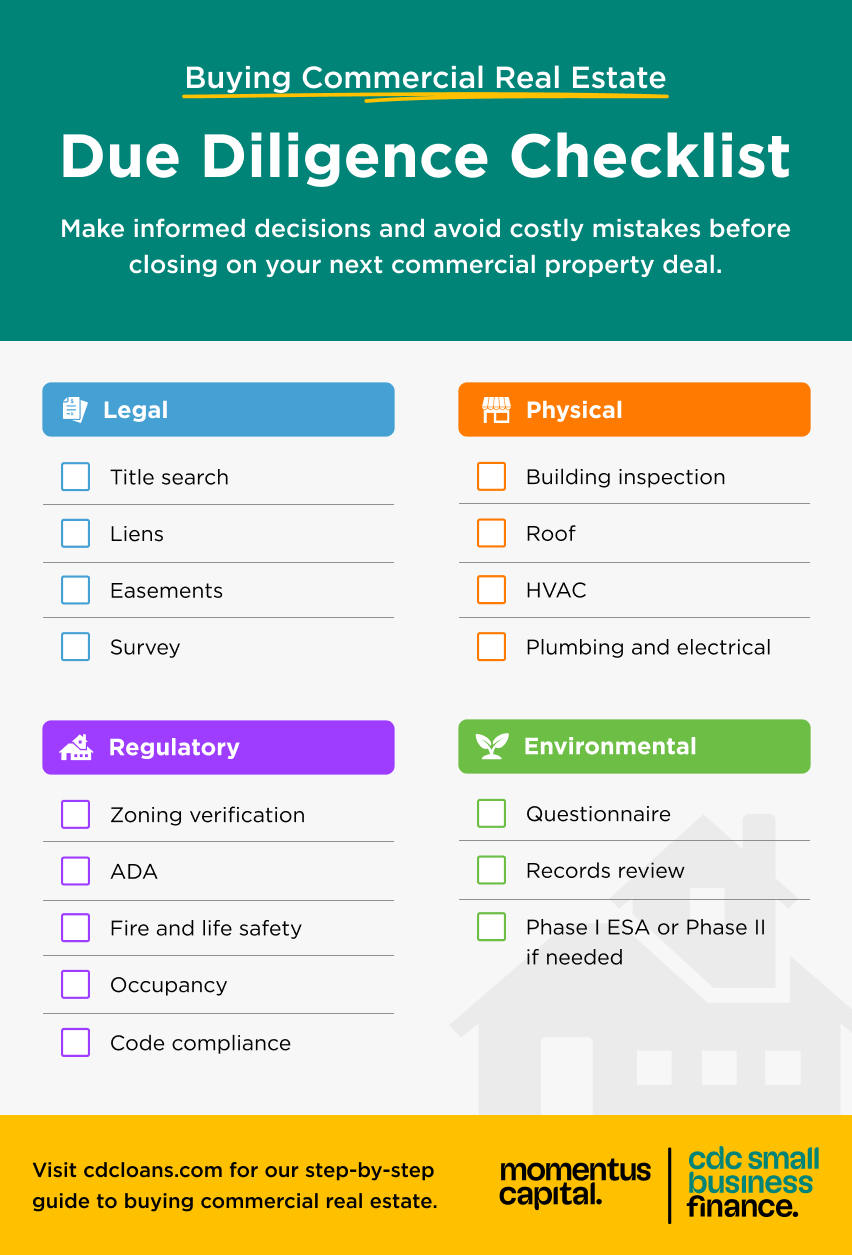
Legal Due Diligence: Title Search, Survey, & Easements
A title search Title Search A review of public records to confirm ownership and identify liens, claims, or restrictions. Open Glossary confirms ownership and identifies liens, unpaid taxes, restrictions, or claims against the property.
A survey Survey A professional map showing property boundaries, structures, driveways, encroachments, and easements. Open Glossary confirms property boundaries, building placement, driveways, fences, encroachments, and other physical details. An easement Easement A legal right that allows another party to use part of the property for a specific purpose. Open Glossary should also be reviewed because it may give another party the right to use part of the property for access, utilities, or another purpose.
These issues matter because they can affect how the property is used and whether clean title can be delivered at closing.
Physical Due Diligence: Inspections & Building Systems
A commercial property inspection Property Inspection A physical review of the building and major systems, such as roof, HVAC, plumbing, electrical, and structure. Open Glossary reviews the condition of the building and major systems. This can include the roof, foundation, structure, HVAC, plumbing, electrical systems, fire systems, accessibility, and visible safety concerns.
Inspection findings may lead to repair requests, credits, price adjustments, additional contractor review, or a decision to move on to another property.
Found a Property You May Want to Buy?
Environmental Due Diligence: Phase I ESA & Phase II if Needed
Lenders usually require some form of environmental due diligence. Depending on the property type, surrounding uses, and risk profile, that may include an environmental questionnaire, records review, or a Phase I Environmental Site Assessment (ESA). Environmental Site Assessment (Phase I ESA) An environmental review that looks for signs of possible contamination based on records, history, and site inspection. Open Glossary
A Phase I ESA is an initial review by an environmental professional. It looks at historical uses, environmental records, nearby risks, and visible signs of possible contamination. If the Phase I identifies concerns, a Phase II ESA Environmental Site Assessment (Phase II ESA) Follow-up testing, such as soil or groundwater testing, when a Phase I identifies possible contamination concerns. Open Glossary may be recommended. A Phase II typically involves testing soil, groundwater, or building materials.
Environmental findings can affect cost, timing, and whether or not a buyer wants to proceed.
Environmental concerns on the property? Contact CDC Small Business Finance to discuss how they may affect timing and financing.
Innocent Landowner Defense
Environmental diligence can also support the Innocent Landowner Defense. Innocent Landowner Defense A legal protection that may help buyers avoid liability for contamination they did not cause, if proper environmental due diligence was completed. Open Glossary In plain language, this is a legal protection that may help a buyer avoid liability for contamination they did not cause, but only if proper environmental due diligence was completed before purchase and other requirements are met.
Business owners should consult qualified environmental and legal advisors for property-specific guidance.
Regulatory Due Diligence: Zoning & Code Compliance
Regulatory review confirms whether the property can legally support the intended business use.
Important checks include zoning, use restrictions, ADA compliance, ADA Compliance Meeting the accessibility requirements that apply to the property. Open Glossary fire and life safety, health and safety rules, occupancy permits, and local code compliance. Code Compliance Whether the property meets applicable building, safety, accessibility, fire, and occupancy rules. Open Glossary If the property needs improvements, code requirements can affect the renovation budget and timeline.
What Happens if Due Diligence Uncovers a Problem?
If due diligence surfaces an issue, the buyer may negotiate repairs, credits, a price reduction, or additional time. For major issues, the buyer may decide not to proceed.
It is recommended to keep the lender informed of any credits, price reductions, major repairs, or scope changes. These items can affect loan structure, underwriting, and closing documentation. Surprises near closing are harder to solve than issues raised early.
Strong diligence helps protect the buyer from surprises that can disrupt the project or add cost after closing. Once the property checks out, the next step is how to finance commercial real estate.
Due Diligence in Motion?
Contact CDC Small Business Finance to align diligence findings with your financing.
Follow the Phases in Our Guide to Buying Commercial Property
- How to Buy Commercial Property: A Step-by-Step Guide for Business Owners
- Phase 1: Lease vs. Buy Commercial Property: Should a Business Owner Buy?
- Phase 2: How to Find Commercial Property for a Business
- Phase 3: Commercial Real Estate Due Diligence Checklist for Buyers
- Phase 4: How to Finance Commercial Real Estate: Loan Options, Underwriting, & Closing
- Phase 5: Commercial Property Tenant Improvements: How to Plan a Build-Out
- Phase 6: Cost of Owning Commercial Property: Responsibilities & Long-Term Strategy
- Commercial Real Estate Glossary: Key Terms for Business Owners