


Key Messages
- Buying commercial property is a multi-step process, not a single transaction.
- Each phase has its own decisions, costs, and risks.
- Preparation early in the process helps prevent delays and cost overruns later.
- Financing matters, but it comes after readiness, property fit, and due diligence are understood.
- CDC Small Business Finance supports owner-users exploring financing options for buying, improving, or building commercial property.
Buying commercial property can give a small business more control over its location and space, greater predictability over long-term occupancy costs, and the opportunity to build equity. Equity The owner's value in the property after subtracting the outstanding loan balance. Open Glossary
But buying a building is not a single decision. Business owners need to determine whether ownership makes sense, find the right property, complete due diligence, Due Diligence A condition that must be satisfied for the deal to move forward, such as financing, inspections, zoning, or permits. Open Glossary secure financing, plan improvements, and prepare for the ongoing responsibilities of ownership.
This step-by-step guide provides an overview of the six phases. Use the links throughout to go deeper into the stage you are currently navigating.
Thinking about buying commercial property? Contact us to discuss where your business is in the process.
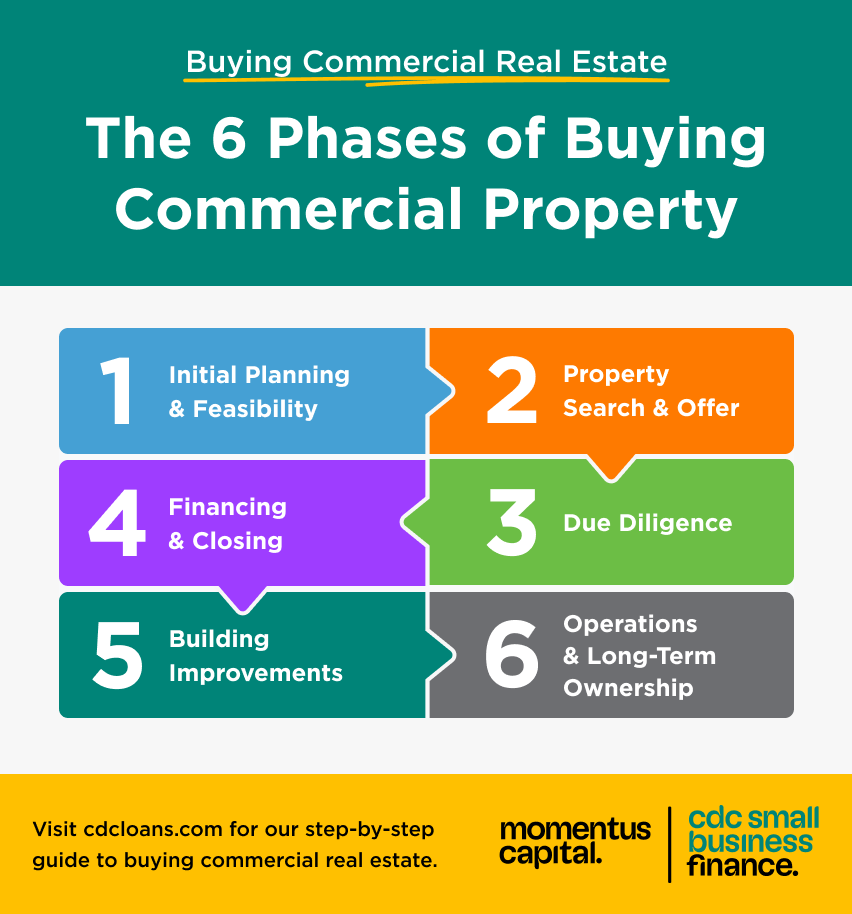
Phase 1: Lease vs. Buy Commercial Property
Before searching for a building, determine whether ownership fits your business. Consider your expected time in the location, space needs, available capital, operating stability, and the full costs of both leasing and owning.
Ownership can provide greater control and the opportunity to build equity, but it also introduces costs and responsibilities that a tenant may not have.
Phase 2: Find Commercial Property That Fits the Business
The right property is about more than price and location. Consider layout, parking, access, utilities, zoning, Zoning Local rules that determine what uses are allowed on a property. Open Glossary infrastructure, customer and employee needs, and whether the building can support the business over time.
Once a promising property is identified, the letter of intent (LOI) Letter of Intent (LOI) A preliminary document that outlines major deal terms before final legal documents are completed. Open Glossary and purchase agreement establish the framework for moving toward due diligence and financing.
Considering Buying a Building for Your Business?
Phase 3: Complete Commercial Real Estate Due Diligence
Before closing, buyers need to understand what they are purchasing. Commercial real estate due diligence Due Diligence A condition that must be satisfied for the deal to move forward, such as financing, inspections, zoning, or permits. Open Glossary may include legal, physical, environmental, and regulatory reviews of the property.
Problems uncovered during this stage can affect the purchase price, repairs, project scope, financing, or whether the buyer decides to proceed.
Have a property under contract? Contact us so financing and due diligence can move in parallel.
Phase 4: Finance the Commercial Property
Commercial real estate financing typically involves application or prequalification, underwriting, third-party reports, approval, and closing.
The financing option that fits depends on the business, borrower, property, project size, occupancy, and intended use. Preparing financial documents and project information early can help make the process more efficient.
For owner-occupied commercial real estate, explore loan eligibility, structures, benefits, and financing options.
Phase 5: Plan Tenant Improvements & Build-out
Many properties need tenant improvements Tenant Improvements Renovations or upgrades that make a space work for the business, such as walls, plumbing, electrical, HVAC, fixtures, accessibility, or specialized build-out. Open Glossary or a build-out Build-out The construction process that turns a space into a functional location for the business. Open Glossary before the business can move in. Renovation scope can affect the project budget, financing, permits, construction timeline, and opening date.
Understanding improvement needs early can help buyers build a more realistic project plan and avoid surprises later.
If your purchase includes renovations, learn how our commercial real estate financing can be used for eligible projects.
Phase 6: Plan for the Cost of Owning Commercial Property
Closing is not the end of the commercial real estate journey. Owners need to budget for carrying costs Carrying Costs The ongoing cost of owning commercial property, including taxes, insurance, utilities, maintenance, and repairs. Open Glossary such as taxes, insurance, utilities, maintenance, and repairs while continuing to manage the property and its compliance requirements.
Long-term planning can also include building reserves, leasing unused space when financing rules allow, refinancing, or eventually selling the property.
Commercial Real Estate Terms to Know
Commercial real estate comes with specialized terminology at every phase, from down payment, Down Payment The cash a borrower contributes toward the purchase price. Requirements depend on the loan product, property, and borrower. Open Glossary site control, and contingency Contingency A condition that must be satisfied for the deal to move forward, such as financing, inspections, zoning, or permits. Open Glossary to Phase I ESA, Environmental Site Assessment (Phase I ESA) An environmental review that looks for signs of possible contamination based on records, history, and site inspection. Open Glossary debt service, Debt Service The loan payment obligation, including principal and interest. Open Glossary and soft costs, Soft Costs Non-construction project costs such as architecture, engineering, permits, legal fees, environmental review, and project management. Open Glossary and owner-occupied. Owner-occupied A property where the business owner uses a required portion of the building for its own operations. Open Glossary
Take the Process One Phase at a Time
Buying commercial property becomes more manageable when the process is broken into clear stages. Start by confirming that ownership makes sense for the business, then work through the property search, due diligence, financing, improvements, and long-term ownership.
Our CDC Small Business Finance loan experts work with small business owners exploring commercial real estate to determine their best options.
Ready to Explore Your Options?
Follow the Phases in Our Guide to Buying Commercial Property
- How to Buy Commercial Property: A Step-by-Step Guide for Business Owners
- Phase 1: Lease vs. Buy Commercial Property: Should a Business Owner Buy?
- Phase 2: How to Find Commercial Property for a Business
- Phase 3: Commercial Real Estate Due Diligence Checklist for Buyers
- Phase 4: How to Finance Commercial Real Estate: Loan Options, Underwriting, & Closing
- Phase 5: Commercial Property Tenant Improvements: How to Plan a Build-Out
- Phase 6: Cost of Owning Commercial Property: Responsibilities & Long-Term Strategy
- Commercial Real Estate Glossary: Key Terms for Business Owners