


Key Messages
- Owning commercial property brings ongoing costs and responsibilities beyond the mortgage.
- Strong record-keeping and planning matter after closing.
- Leasing extra space may help, but owner-occupancy rules still apply.
- Ownership can build equity and support long-term business goals.
Closing on a building is a milestone, but it is not the end of the process. The cost of owning commercial property includes the loan payment as well as taxes, insurance, utilities, maintenance, repairs, compliance, and future capital needs.
Owning commercial property can create stability and equity. It also makes the business responsible for the property in a new way.
Own a property or preparing to buy one? Contact us to learn about long-term planning and financing questions.
Ongoing Costs of Owning Commercial Property
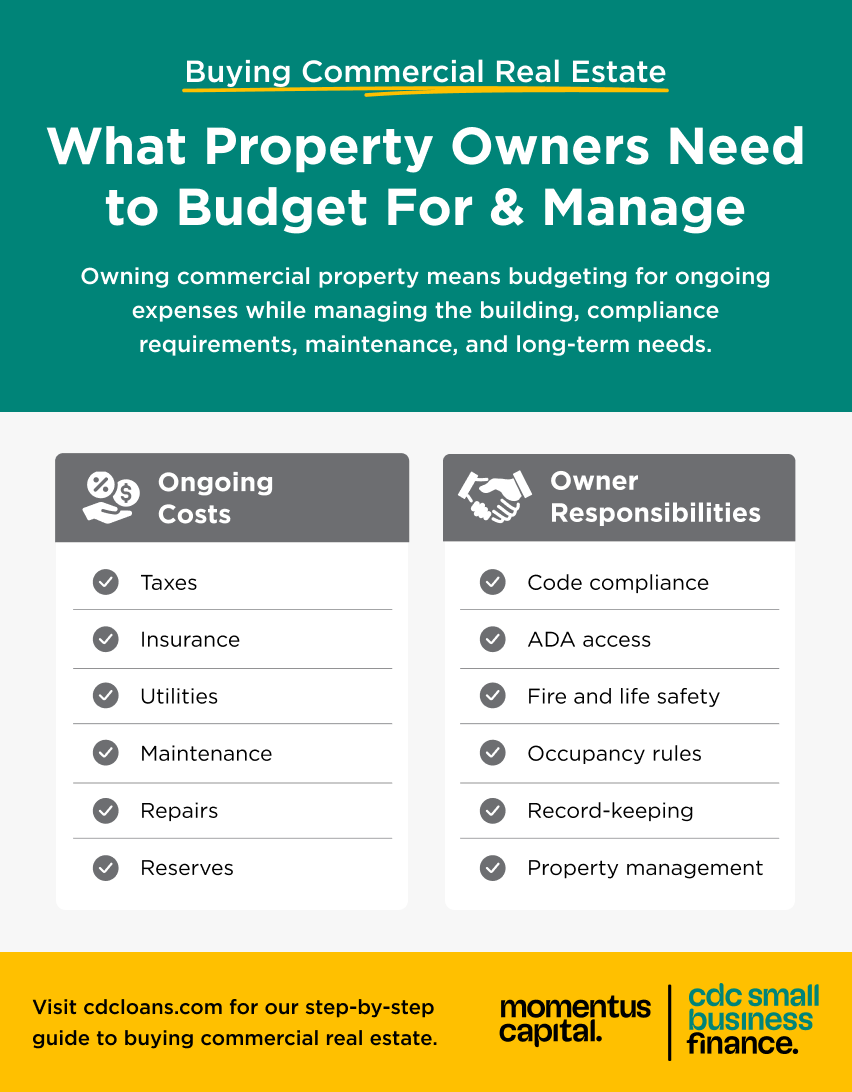
The cost of owning commercial property includes more than the loan payment. Business owners should plan for:
- Property taxes
- Compliance-related upgrades
- Insurance
- Utilities
- Landscaping or exterior upkeep
- Repairs and maintenance
- Security
- Reserves for future improvements
- Property management, if needed
These are often called carrying costs. Carrying Costs The ongoing cost of owning commercial property, including taxes, insurance, utilities, maintenance, and repairs. Open Glossary Understanding them early helps the business build a more realistic long-term budget.
Ready to Explore Financing?
How to Plan for Repairs & Major Property Expenses
Routine maintenance and major capital expenses should be planned separately. Routine costs may include landscaping, cleaning, minor repairs, and scheduled servicing. Larger expenses may include replacing a roof, HVAC system, parking lot, electrical equipment, or other major building components.
Business owners should maintain reserves and periodically update their property plan as systems age. Waiting until a major system fails can create unexpected pressure on business cash flow.
Considering buying a building for your business? Learn how SBA 504 commercial real estate financing works.
Maintenance & Compliance Over Time
Owners need to keep the property safe, functional, and compliant. That includes building systems, ADA compliance, ADA Compliance Meeting the accessibility requirements that apply to the property. Open Glossary fire and life safety, occupancy rules, and local code requirements.
Maintenance can be planned or unexpected. A roof replacement, HVAC repair, or plumbing issue can strain cash flow if the business has not built reserves.
Why Financial Records Still Matter After Closing
Good records matter after closing. Lenders, tax advisors, partners, and future financing sources may want to see how the property has been managed.
Track operating costs, repairs, improvements, insurance, taxes, and major maintenance. Strong records also help the business evaluate future refinancing, expansion, or sale decisions.
Can a Business Lease Extra Space?
Many owners lease extra space to another tenant. That income can help offset costs, but the plan should fit the financing requirements.
Some owner-occupied Owner-occupied A property where the business owner uses a required portion of the building for its own operations. Open Glossary financing programs require the business to occupy a certain percentage of the property. Before leasing unused space, confirm how the occupancy rules apply.
Thinking about leasing part of your building? Contact us to confirm how it fits with your financing.
Building Equity Through Ownership
Equity Equity The owner's value in the property after subtracting the outstanding loan balance. Open Glossary is one reason some businesses choose ownership over leasing. It may increase as the loan principal is repaid or if the property appreciates. Property values can also decline, however, and transaction costs can reduce the proceeds available from a future sale or refinancing.
When Refinancing May Enter the Conversation
A property owner may explore refinancing to change loan terms, address a maturity date, finance eligible improvements, or support another business need. Whether refinancing makes sense depends on the existing debt, property value, business cash flow, transaction costs, and available financing options.
Strong financial and property records can make that discussion easier. Owners should also speak with their lender before making material changes to the property’s use, occupancy, or leasing arrangements.
When Owners May Consider Selling or Changing Course
A business owner may consider selling when the market is strong, the business needs a different location, expansion requires a larger facility, or the owner wants to free capital for another purpose. The decision should account for business needs, market conditions, debt, taxes, and future plans.
Owning commercial property works best when business owners plan for the long-term costs and responsibilities from the beginning. To revisit the full journey, review the step-by-step guide to buying commercial property.
Planning Next Steps for a Property You Own or Want to Own?
Follow the Phases in Our Guide to Buying Commercial Property
- How to Buy Commercial Property: A Step-by-Step Guide for Business Owners
- Phase 1: Lease vs. Buy Commercial Property: Should a Business Owner Buy?
- Phase 2: How to Find Commercial Property for a Business
- Phase 3: Commercial Real Estate Due Diligence Checklist for Buyers
- Phase 4: How to Finance Commercial Real Estate: Loan Options, Underwriting, & Closing
- Phase 5: Commercial Property Tenant Improvements: How to Plan a Build-Out
- Phase 6: Cost of Owning Commercial Property: Responsibilities & Long-Term Strategy
- Commercial Real Estate Glossary: Key Terms for Business Owners